
Valve for High-Temperature Industrial Processes
In power plants, refineries, chemical units and steel mills, one wrong valve can mean leakage, unplanned shutdowns and serious safety risks. Choosing a high-temperature valve is not just about matching pipe size. It is about matching metallurgy, design, sealing and standards to your exact process. This guide walks you through the decision step by step.
Why High-Temperature Valve Selection Matters
At elevated temperatures, metals expand, lose strength and creep over time. Seals harden, gaskets relax and stems can seize. A valve that performs well at 150°C may fail within months at 500°C.
Common Problems from Poor Selection
- Body and bonnet leakage from thermal cycling
- Stem seizing and galling
- Seat erosion and loss of shut-off
- Premature material fatigue and creep
6 Key Factors When Choosing a High-Temperature Valve
1. Operating Temperature and Pressure
Start with the maximum operating temperature and pressure, plus upset conditions. Every valve has a pressure–temperature rating: as temperature rises, allowable pressure falls. Always check the rating against standards such as ASME B16.34 and design for the worst case, not the average.
2. Valve Body and Trim Material
Material is the single biggest factor in heat performance.
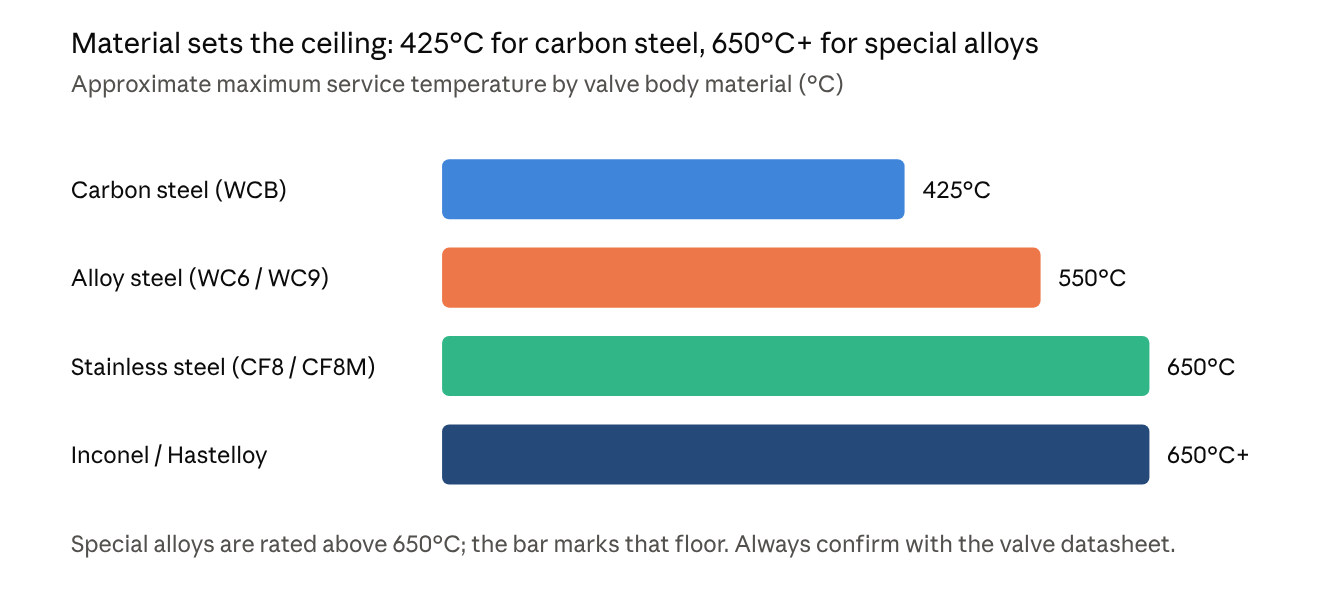
Recommended Materials by Temperature Range
| Temperature Range | Suggested Material | Typical Use |
| Up to 425°C | Carbon Steel (WCB) | Steam, hot oil |
| Up to 550°C | Alloy Steel (WC6 / WC9) | Power plants, boilers |
| Up to 650°C | Stainless Steel (CF8 / CF8M) | Chemical, corrosive media |
| 650°C and above | Special alloys (Inconel, Hastelloy) | Extreme heat, aggressive fluids |
Approximate values from the material table above; always verify against the manufacturer datasheet
3. Valve Type
Gate Valves
Ideal for full-flow, on/off isolation in steam and hot-oil lines with minimal pressure drop.
Globe Valves
Best for throttling and flow control where precise regulation is needed.
Check Valves
Prevent backflow in pumps and boiler feed lines, protecting equipment from reverse flow.
Ball and Butterfly Valves
Suitable for quick shut-off, but only with high-temperature seats (metal-seated or graphite-based). Standard soft seats such as PTFE will not survive extreme heat.
Explore our full range of industrial valves at Parth Valve to match each type to your application.
4. Sealing and Packing
Stem packing and gaskets often fail before the valve body does. Use flexible graphite packing and spiral-wound gaskets with metal reinforcement. For bellows-sealed designs, you gain near-zero stem leakage, which is vital for toxic or hazardous media.
5. Process Media
Steam, thermal oil, molten salts and flue gases all behave differently. Consider corrosiveness, erosiveness, viscosity and whether solid particles are present. A material that resists heat may still corrode in the wrong chemical environment.
6. Standards and Certifications
Look for compliance with API 600 and API 602 for steel valves, ASME standards, and ISO 9001 quality systems. Certified material test reports (MTRs) and pressure testing give you documented proof of quality.
Quick Comparison: Which Valve for Which Job?
| Valve Type | Heat Tolerance | Flow Control | Best For |
| Gate | High | Low (on/off) | Isolation |
| Globe | High | Excellent | Throttling |
| Check | High | Automatic | Backflow prevention |
| Ball (metal-seated) | Medium–High | Good | Fast shut-off |
| Butterfly (high-performance) | Medium–High | Good | Large lines |
Installation and Maintenance Tips
- Allow for thermal expansion in piping design
- Warm up and cool down lines gradually to avoid thermal shock
- Re-torque bolting after the first heat cycle
- Inspect packing and seats during scheduled shutdowns
- Keep spare gaskets and packing sets in stock
Conclusion
The right high-temperature valve comes down to six things: operating conditions, material, valve type, sealing, media and certified standards. Get these right and you will cut downtime, lower maintenance costs and keep your plant safe. When in doubt, consult an experienced manufacturer who can verify your specifications before you order.
Ready to Select the Right Valve?
Talk to the experts at Parth Valve. Share your temperature, pressure and media details and get a tailored recommendation and quote. Contact us today to get started.
Frequently Asked Questions (FAQs)
What is the best valve material for high-temperature valve applications?
A – Alloy steel (WC6/WC9) works well up to about 550°C, while stainless steel and special alloys like Inconel suit higher temperatures or corrosive media.
Which valve is best for steam service?
A – Gate and globe valves in carbon or alloy steel are the most common choices for steam lines, with globe valves preferred where throttling is required.
Can ball valves be used in high-temperature processes?
A – Yes, but only with metal-seated or graphite-seated designs. Standard PTFE seats are limited to far lower temperatures.
How often should high-temperature valves be inspected?
A – Inspect during every planned shutdown, and check packing and flange bolting more frequently in cyclic-service plants.
What standards apply to high-temperature industrial valves?
A – Common standards include API 600, API 602, API 598 (testing), ASME B16.34 and ISO 9001 for quality management.